Business Process Automation Services Less Manual Work. Fewer Repetitive Tasks. Smarter Business Processes.
How much time does your team spend every day copying information, sending repetitive emails, updating spreadsheets, creating reports, following up on enquiries or moving data between different applications?
One small repetitive task may take only a few minutes.
But when it is repeated every day by multiple employees, it becomes a significant business cost.
Business Process Automation (BPA) helps identify these repetitive processes and automate suitable steps using software, workflows, APIs, integrations and AI.
Nikitha provides Business Process Automation services to help businesses reduce repetitive manual work, improve process consistency and connect disconnected business systems.
Don't Automate Everything. Automate What Shouldn't Need Manual Work.
What Is Business Process Automation?
Business Process Automation is the use of technology to automate repetitive, rule-based or time-consuming activities within a business workflow.
Consider a website enquiry.
Without automation:
Customer submits enquiry
Employee checks email
Copies customer information
Updates spreadsheet / CRM
Assigns enquiry to salesperson
Sends acknowledgement
Creates follow-up reminder
Several manual actions are required for one enquiry.
You may not need another completely new application.
Depending on API availability and technical compatibility, we can evaluate integrations between your existing:
Website
CRM
ERP
Email
WhatsApp
eCommerce platform
Payment gateway
Shipping platform
Google Workspace
Microsoft 365
Project-management software
Cloud applications
Internal applications
AI services
Databases
Custom software
The goal is not more software. The goal is better workflow.
Custom Business Automation Development
Ready-made automation platforms can solve many common requirements.
But some businesses have workflows unique to their operations.
Nikitha can also develop custom solutions such as:
Workflow applications
Admin dashboards
Customer portals
Vendor portals
Approval systems
Reporting dashboards
Internal management tools
Custom APIs
Data synchronization
Business-specific automation
We choose between ready-made integration and custom development based on the actual requirement.
Our Business Process Automation Approach
1. Tell Us the Manual Process
Show us what your team currently does.
2. Process Mapping
We map the workflow from beginning to end.
3. Identify Repetitive Steps
We identify activities that consume unnecessary manual effort.
4. Decide What Should Be Automated
Not every step needs automation. We prioritize areas where automation can provide practical value.
5. Select the Technology
We evaluate existing software, APIs, automation platforms, AI and custom development options.
6. Build the Workflow
We connect the required applications and implement the agreed automation.
7. Test Exceptions
A workflow must handle more than the ideal scenario. We test common exceptions and failure conditions.
8. Deploy & Monitor
After approval, the workflow is deployed and monitored.
9. Improve
As your business changes, the workflow can be reviewed and extended.
Business Process Automation Is Not About Replacing People
The purpose of automation should not simply be:
"How can we remove people?"
A more useful question is:
"Which repetitive tasks are preventing our people from doing higher-value work?"
When routine activities are automated appropriately, employees can focus more on:
Customers
Sales
Problem-solving
Creativity
Relationships
Strategy
Decision-making
Let Software Handle Repetition. Let People Handle Value.
Why Choose Nikitha for Business Process Automation?
Business automation often requires more than installing one tool.
It can involve:
Website Development + APIs + Databases + CRM + Communication + Custom Applications + AI + Business Logic
Nikitha's web development and digital solutions experience enables us to approach automation from both the technical and business-process perspectives.
We don't begin by selling you a particular automation platform.
We begin by understanding your process.
Frequently Asked Questions
Business Process Automation is the use of software, integrations, APIs and other technologies to automate repetitive steps within business workflows.
Lead management, customer enquiries, notifications, approvals, data entry, reporting, CRM updates, document workflows, onboarding and many other repetitive processes may be suitable for automation.
Not necessarily. If your existing applications provide suitable APIs or integrations, it may be possible to connect them rather than replace them.
Yes. Small businesses can start by automating one repetitive workflow such as enquiry management, follow-ups, notifications or data entry.
Business Process Automation is broader and can use rules, software, APIs and integrations without AI. AI automation adds artificial intelligence where tasks require language understanding, classification, summarization or other AI capabilities.
Yes, if your CRM provides suitable APIs or integration options. We first review the systems and required workflow.
Supported WhatsApp business workflows can be automated subject to the platform's APIs, permissions, templates and applicable policies.
Yes. When ready-made tools cannot meet the requirement, we can evaluate custom web applications, APIs, dashboards and workflow systems.
No. Processes requiring judgment, sensitive decisions or complex exception handling may need human involvement. We recommend automating only where it provides practical value.
The cost depends on the complexity of the workflow, number of applications, API availability, custom development, AI requirements and ongoing support. We review your existing process before providing an estimate.
You don't need to know which automation software or AI platform you need.
"Every day, my team does this..."
Our developers can review the workflow, identify repetitive steps and recommend what can realistically be automated.
Start with One Process. Automate. Measure. Improve.
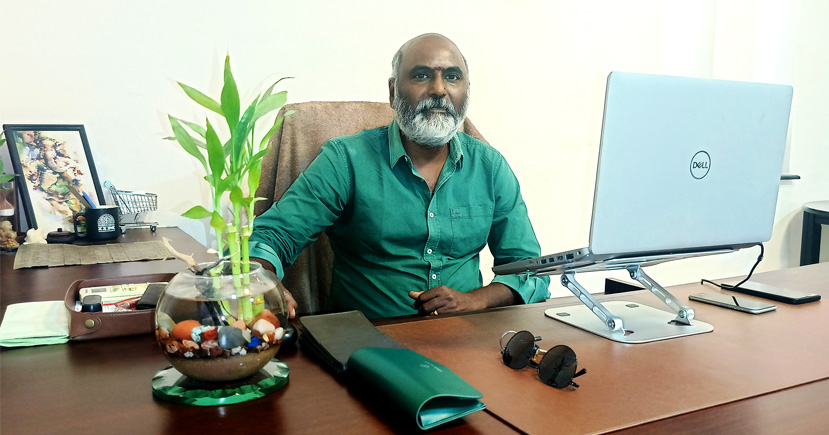
Schedule a meeting with Mr. Sivakumar, a seasoned logo design, website and digital marketing consultant. Having successfully handled over 7,000 logo projects, 3200+ websites and 500+ digital marketing projects, he brings unparalleled expertise to enhance your online business and elevate your brand identity.